
In this article

The stakeholder model of corporate governance requires large organizations to account for the interests of employees, communities, suppliers and the environment alongside shareholders. For general counsel, chief sustainability officers and board directors at public companies, this is showing up in their daily workload through expanding disclosure mandates, ESG-focused investor scrutiny and reputational risks that cut across every business unit.
How do you consolidate ESG data from global operations, translate stakeholder priorities into board-ready insights and meet regulatory requirements across jurisdictions without doubling your governance team?
This guide addresses that question directly. You’ll cover:
The stakeholder model of corporate governance focuses on the impact of corporate activity on all stakeholders rather than prioritizing only shareholders. Under this model, corporations are accountable to multiple constituencies and must actively manage relationships across diverse stakeholder groups. The model also incorporates the interests of third parties that depend on the corporation, creating accountability frameworks that extend beyond traditional financial metrics.
Stakeholders typically encompass three categories:
While stakeholders may not hold direct governance authority, institutional investors and advisory panels increasingly participate through stewardship codes and disclosure engagements. Each stakeholder group seeks specific value delivery, whether paychecks, returns, quality products, community investment or environmental stewardship.
Governments worldwide are making stakeholder accountability mandatory rather than voluntary. Large companies now face legal requirements to track and report how their operations affect employees, communities, suppliers and the environment.
The EU leads this shift with two distinct but complementary frameworks. First, the Corporate Sustainability Due Diligence Directive (CSDDD) requires companies to monitor and address human rights and environmental risks throughout their supply chains.
Supporting this framework, the Corporate Sustainability Reporting Directive (CSRD) mandates sustainability disclosures using double materiality assessments. Wave 1 companies, those previously subject to the NFRD, began reporting in 2025.
However, the EU’s 2025 Omnibus package and “stop-the-clock” directive delayed Wave 2 reporting by two years and significantly narrowed the scope to companies with over 1,000 employees and €450 million or more in net turnover.
Get expert insights on EU Corporate Sustainability Due Diligence requirements, risk management strategies and practical implementation steps.

In the United States, the SEC’s climate disclosure rules remain pending litigation. The SEC adopted the rules in March 2024 but voluntarily stayed them, and in March 2025 the Commission voted to withdraw its defense of the rules entirely. The Eighth Circuit has held the case in abeyance, directing the SEC to either defend or rescind the rules through notice-and-comment rulemaking.
For enterprise boards, this creates planning uncertainty: The rules have never taken effect, but the underlying disclosure expectations around climate risk and ESG reporting persist through investor demands and state-level regulations.
Separately, beneficial ownership requirements under the Corporate Transparency Act have been significantly narrowed. In March 2025, FinCEN issued an interim final rule exempting all domestic U.S. companies from BOI reporting. Only foreign-formed entities registered to do business in the U.S. remain subject to filing requirements.
Other jurisdictions, including the UK, Canada and Australia, continue strengthening ESG reporting requirements. According to the APAC Governance Outlook 2026 by Diligent Institute, the Governance Institute of Australia and the Singapore Institute of Directors, 27% of APAC boards now list environmental and sustainability strategy as a standing agenda item. For enterprise organizations with operations across regions, stakeholder governance is a compliance requirement regardless of headquarters location.
The shareholder and stakeholder models represent fundamentally different approaches to corporate purpose and accountability. The shareholder model prioritizes maximizing returns for equity owners, while the stakeholder model takes a broader view that accounts for business activities’ impact on multiple groups of people.
A board operating under the shareholder model focuses primarily on maximizing the value of the company’s shares. Conversely, a board following the stakeholder model must balance financial performance with broader responsibilities, including corporate social responsibility (CSR), environmental, social and governance (ESG) performance and community impact considerations.
This debate has a live political dimension playing out in boardrooms right now. In the U.S., ESG backlash has led some companies to deprioritize sustainability initiatives, while others continue expanding stakeholder programs based on measurable business results.
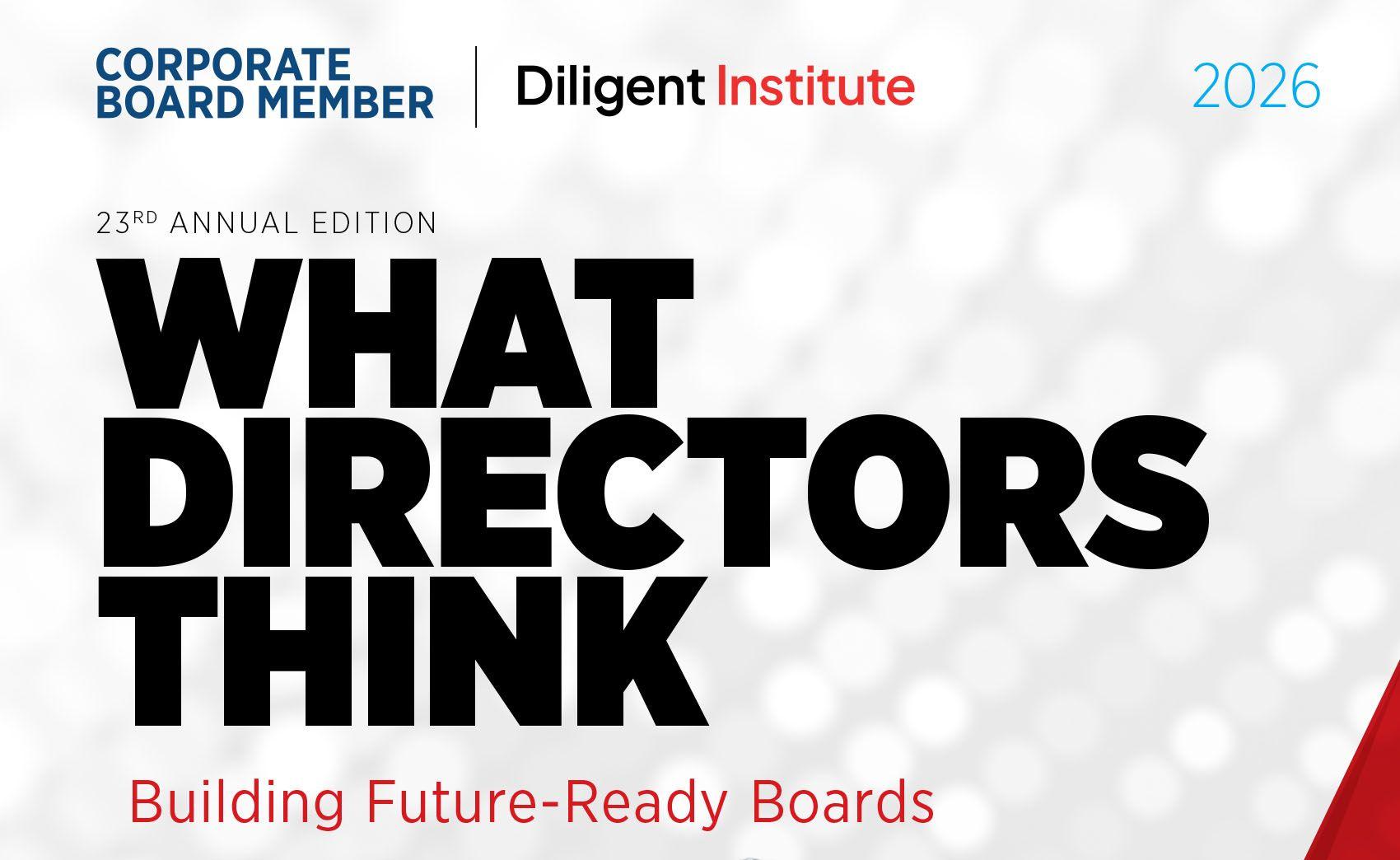
According to What Directors Think 2026 by Diligent Institute, only 27% of directors list environmental and sustainability strategy as a board agenda item, and just 2% prioritize sustainability expertise when recruiting new directors.
For general counsel and chief sustainability officers at U.S. companies, this creates a genuine boardroom tension: How do you maintain governance credibility with EU regulators and institutional investors while responding to domestic political pressure to deprioritize ESG commitment?
“The activists are always looking at who are the web of stakeholders. In the U.S. vs. Europe, it’s shareholder primacy mindset vs stakeholder primacy in Europe,” says Catherine Morris, Director at PJT Partners. “Every market has its own governance regime and local nuances.”
The complexity difference is substantial. Director responsibilities have expanded to include ESG oversight, cybersecurity risk management, enhanced disclosure requirements and stakeholder engagement. These expanding mandates occur alongside existing fiduciary duties, creating time pressures that require advanced governance technologies.
Effective stakeholder governance requires five core principles that enterprise boards must implement systematically:
“At the top level, businesses care about three things: longevity, how are we going to stay here and deliver what we want; how will we be profitable; and how will we meet the needs of our stakeholders?” says Edna Conway, Board Director, Executive Advisor and Author.
Enterprise stakeholder governance creates competitive advantages while helping organizations meet regulatory requirements and stakeholder expectations across global operations.
Stakeholder governance provides frameworks for regulatory compliance across multiple jurisdictions while identifying emerging risks early. This proactive approach reduces compliance costs and regulatory penalties while strengthening operational resilience. For enterprise boards, this means fewer compliance surprises, reduced regulatory scrutiny and better preparation for requirements like climate disclosure and supply chain due diligence rules.
Institutional investors controlling trillions of dollars in assets now evaluate investments based on stakeholder governance capabilities. While some U.S. investors have scaled back public ESG commitments amid political headwinds, underlying investment practices continue to emphasize governance quality, climate risk and stakeholder transparency as material financial factors.
Investor relations teams at enterprise companies increasingly need to translate stakeholder governance decisions into capital market communications, connecting board strategy to the questions ESG-focused analysts and fund managers actually ask.
Global ESG-focused assets are projected to reach approximately $40 trillion by 2030, according to Bloomberg. Enterprise boards that demonstrate stakeholder governance maturity can access lower-cost capital and attract long-term institutional investors.
Stakeholder governance drives measurable operational gains. Companies that treat employees as valued stakeholders, not cost centers, are more likely to see higher retention rates and productivity. Long-term supplier partnerships reduce supply chain disruptions. And systematic stakeholder tracking helps organizations identify and address issues before they become regulatory problems.
Consumer research from PwC’s 2024 Voice of the Consumer Survey shows that 80% of global consumers are willing to pay a premium for sustainably produced or sourced products. Beyond pricing power, transparent stakeholder communication strengthens brand reputation, particularly for enterprises operating in consumer-facing markets or regulated industries.
Measuring stakeholder impact is arguably the biggest operational challenge for sustainability and governance teams. Revenue and profit margins are straightforward to quantify. Employee wellbeing, community impact and environmental benefit require entirely different frameworks.
Three disclosure standards are converging to define how enterprises report on stakeholder impact:
Boards now face a concrete obligation: centralized data collection across business units, standardized reporting taxonomies and governance technology that connects ESG metrics to board-level decisions.
While offering significant benefits, stakeholder governance implementation presents challenges that require careful management.
Decision-making complexity. Managing multiple stakeholder interests creates complexity that can slow organizational responsiveness. Comprehensive employee benefits may reduce short-term shareholder returns, while environmental investments may conflict with cost reduction targets. Enterprise boards need processes that can evaluate trade-offs while maintaining competitive positioning.
Implementation costs. Transitioning to stakeholder governance involves investments in governance technology, sustainability initiatives, enhanced reporting capabilities and expanded director education. These require careful business case development and phased implementation.
Stakeholder engagement demands. Systematic engagement requires sustained communication and relationship management across geographies, business units and stakeholder groups, from regular surveys and community meetings to supplier assessments and investor communications.
Board expertise gaps. Enterprise stakeholder governance requires directors with experience across ESG, regulatory compliance, technology governance and stakeholder engagement. According to the APAC Governance Outlook 2026 by Diligent Institute, 35% of boards flag environmental sustainability expertise as an urgent upskilling need. Yet when it comes to recruitment, that priority barely registers. Just 2% of U.S. directors prioritize environmental sustainability expertise in board searches, according to What Directors Think 2025 by Diligent Institute, Corporate Board Member and FTI Consulting. Boards know they lack the expertise stakeholder governance demands, but they are not yet recruiting to close that gap.
Enterprise adoption of stakeholder governance continues evolving, shaped by regulatory momentum, political pushback and shifting board composition.
The 2019 Business Roundtable statement, signed by over 180 CEOs, redefined corporate purpose to serve employees, customers, communities and suppliers alongside shareholders. Six years on, implementation remains uneven. Some signatories have made structural governance changes, embedding stakeholder metrics into executive compensation and board committee mandates.
Others have treated the commitment largely as a communications exercise. In 2025 and 2026, several prominent U.S. companies scaled back ESG-branded initiatives in response to political and regulatory pressure, even as their European operations expanded stakeholder programs to meet CSRD requirements.
Board composition significantly influences stakeholder governance adoption. Research consistently shows that boards with diverse perspectives, including gender, professional background and geographic experience, demonstrate stronger governance oversight and greater attention to ESG considerations. According to What Directors Think 2026 by Diligent Institute and Corporate Board Member, evidence shows that diverse board composition leads to greater overall board effectiveness.
This has practical implications for board recruitment. Enterprise boards pursuing stakeholder governance should consider candidates with sustainability expertise, multi-jurisdictional regulatory experience and stakeholder engagement backgrounds when designing skills matrices and nominating committee criteria.
The operational challenges documented above share a common thread: Data is fragmented across business units, stakeholder reporting is manual and time-intensive, and boards lack consolidated visibility into ESG performance and stakeholder risks. Governance technology addresses each of these failure points.
One of the biggest time sinks for corporate secretaries and governance teams is assembling board materials that adequately represent stakeholder interests across ESG, compliance and operational dimensions.
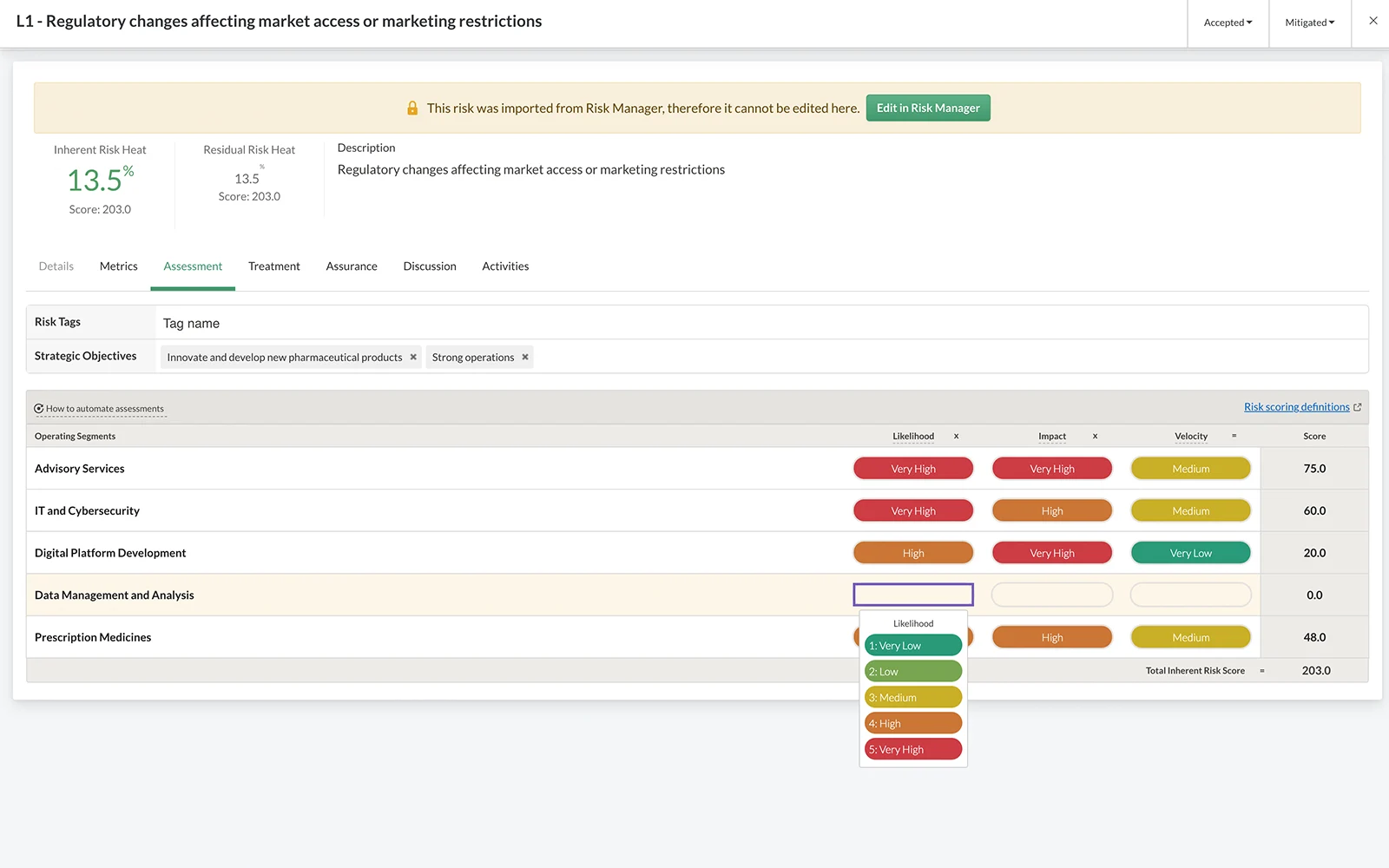
Diligent Market Intelligence connects stakeholder governance to capital markets by tracking shareholder activism, voting behavior and ESG-focused investor sentiment. This enables investor relations teams to translate stakeholder governance decisions into capital market communications, bridging the gap between boardroom strategy and analyst expectations
Stakeholder governance fails at the operational level, not the strategic one. Most enterprise boards accept that they owe accountability to employees, communities, suppliers and the environment. Where governance breaks down is in the daily work: Consolidating ESG data from dozens of business units, preparing board materials that reflect stakeholder considerations alongside financial performance and keeping pace with disclosure requirements that differ by jurisdiction and change by quarter.
For the general counsel or chief sustainability officer responsible for this process, the pressure compounds in both directions. Regulators and institutional investors expect increasingly granular stakeholder reporting. Internal teams push back on the time and resources that reporting demands. The frameworks in this guide, from stakeholder mapping and double materiality assessments to the five core principles, give boards the structure to govern effectively. Technology removes the bottleneck by automating the data consolidation, risk scanning and reporting work that would otherwise require headcount boards do not have.
Discover how Diligent helps large organizations turn stakeholder commitments into measurable governance outcomes. Schedule a demo to see how AI-powered governance technology connects ESG data, board preparation and stakeholder reporting on a single platform.
The shareholder model focuses exclusively on maximizing equity returns, while the stakeholder model expands corporate accountability to employees, communities, suppliers and the environment. In 2026, new regulations like CSRD and partially effective SEC climate rules make this a compliance distinction, not just a philosophical one.
ISSB S1/S2, EU ESRS (under CSRD) and TCFD-aligned standards are converging to create global stakeholder disclosure requirements. Companies with EU operations face the most immediate obligations, but ISSB adoption is expanding across jurisdictions including the UK, Australia and Canada.
Effective measurement requires double materiality assessments, centralized ESG data collection and governance technology that connects stakeholder metrics to board-level reporting. Science-based scoring and peer benchmarking provide objective baselines for tracking progress over time.
AI-powered governance platforms automate stakeholder reporting, synthesize ESG data from multiple sources and provide risk scanning capabilities. These tools reduce the administrative burden of multi-jurisdictional compliance while ensuring that stakeholder considerations are integrated into board decision-making.
AI ethics oversight, workforce activism, climate litigation exposure and expanding disclosure mandates across APAC and the Americas will drive stakeholder governance adoption. Boards that build measurement infrastructure now will be better prepared as these requirements take effect.
Explore how Diligent helps large organizations turn stakeholder commitments into measurable governance outcomes. Schedule a demo to see how AI-powered governance technology works at enterprise scale.