
In this article

Anti-corruption and anti-bribery (ABAC) compliance has become one of the defining challenges for organizations operating across borders. With 46 jurisdictions enforcing dedicated bribery and corruption laws — and enforcement mechanisms shifting rapidly — compliance teams face a complex web of overlapping requirements that demand constant vigilance.
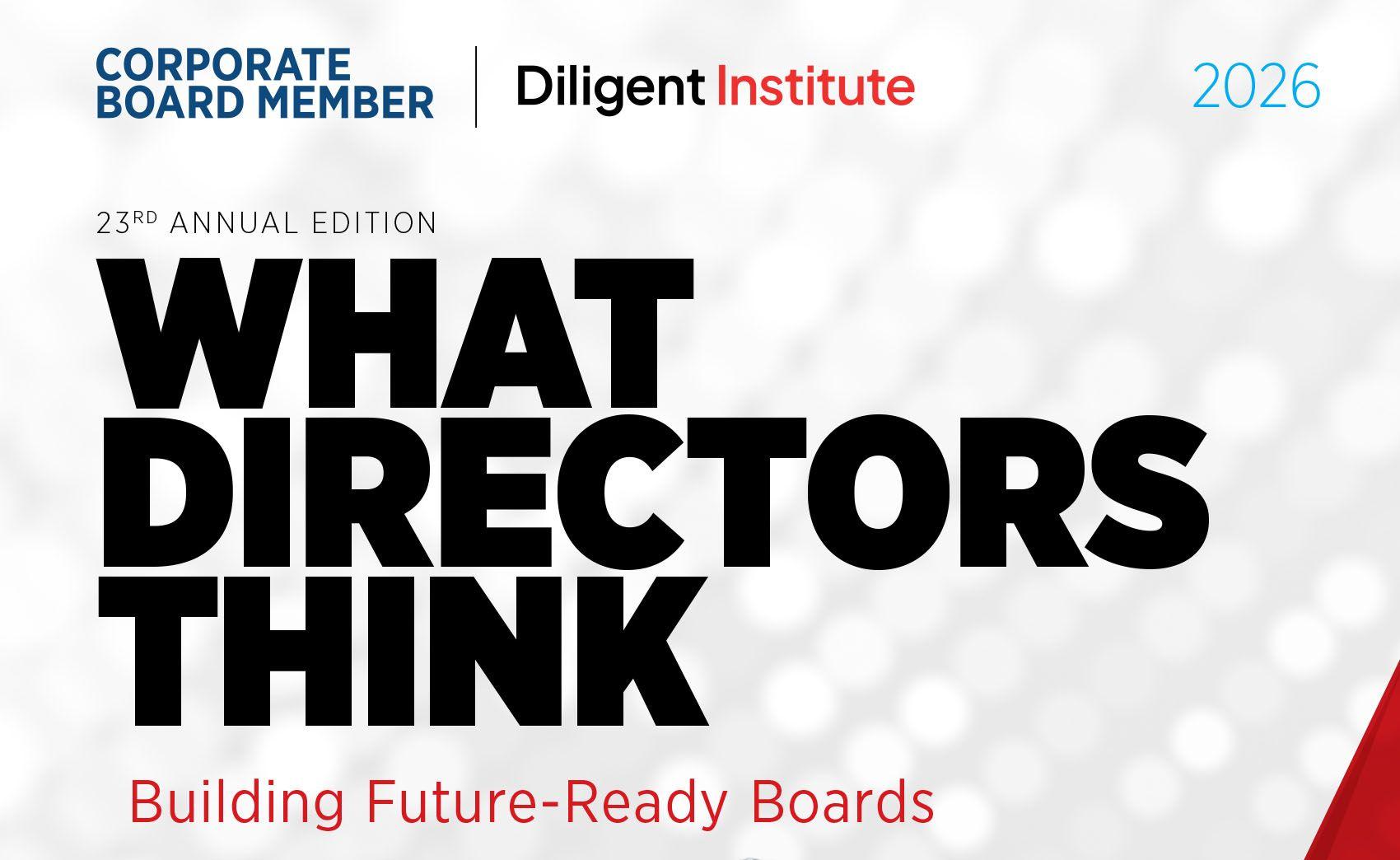
The governance gap is real. According to Diligent Institute's What Directors Think 2026 survey, only 5% of directors expect anti-corruption and fraud prevention to demand significant board attention in 2026 — even as enforcement actions continue globally and 10% of directors identify third-party or supply chain compliance failures as a top organizational risk.
At the same time, 41% of directors believe AI and technology regulation is the most underestimated compliance area, while supply chain accountability (15%) and anti-corruption (6%) receive far less boardroom focus, a dangerous blind spot for organizations with complex third-party ecosystems. Understanding how to build an effective ABAC compliance program is now a prerequisite for doing business globally.
This comprehensive guide covers everything you need to know about anti-bribery and corruption compliance:
Anti-bribery makes it a crime to offer a bribe, accept a bribe, attempt to bribe a foreign official or fail to prevent someone else from offering a bribe for your organization. That means your organization can be held accountable if a third-party attempts to bribe public officials while acting on behalf of your organization.
Anti-corruption guidelines are similar to anti-bribery guidelines. They prohibit paying foreign public officials or the leaders of state-owned organizations in return for favorable treatment. Payment isn’t just money, either. Lavish trips, fancy cars and expensive dinners could all fall under anti-corruption laws.
Around the world, 46 jurisdictions have laws addressing bribery and corruption. The U.S. and the UK have influential ABAC laws that set a global standard for bribery and corruption and the penalties associated with each.
It’s essential to understand the specific ABAC guidelines for the jurisdictions where you or your third parties do business, since the regulations vary.
Anti-bribery laws and guidelines exist worldwide. Some are legally enforceable, while others establish frameworks for how organizations can prevent bribery and related criminal activity.
The UK Bribery Act is considered a landmark law. It establishes criminal law on bribery and covers not only those who offer or accept bribes but also any third parties who offer or accept bribes on behalf of another entity. Unlike other laws, the UK Bribery Act applies to both the private and public sectors.
Under the act, bribery is defined as:
It’s important to note that the UK Bribery Act sets a stricter standard than many other laws since even paying to expedite a routine government action is considered a bribe. You are still accountable even if a third party offers a bribe to benefit your organization.
Penalties vary depending on the severity of the violation. These can include:
The OECD Anti-Bribery Convention criminalizes the bribery of foreign public officials. This policy is legally binding and applies to international business transactions. Though it’s not the only anti-bribery law on the books, it’s unique in that it focuses on what it calls the “supply side” of the bribe. This means it punishes the entity offering the bribe, not the entity receiving it.
Organizations that agreed to the new 2021 Anti-Bribery Recommendation will have to implement new processes to detect and mitigate risks related to foreign bribery.
ISO 37001 sets a standard, not a law, but it’s integral to achieving compliance. Organizations of all sizes can incorporate ISO 37001 into their unique activities. Implementing aspects of this stand can include:
Though ISO 37001 is not punishable by law, ISO compliance paves the way for compliance with conventions (like the aforementioned UK Anti-Bribery Act and OECD) that are.
The United State’s Foreign Corrupt Practices Act (FCPA) of 1977 can be seen as a companion to the UK Bribery Act. It prevents organizations from bribing foreign officials to benefit their business. It also sets a global standard for corruption since it was amended in 1998 to cover domestic and foreign organizations.
The FCPA requires all publicly-traded companies to document their internal accounting controls to reflect all transactions. The Department of Justice (DOJ) and the Securities and Exchange Commission (SEC) enforce the FCPA, which has been a top priority for both organizations for over a decade.
Organizations that violate the FCPA could face penalties, including:
Your organization and third-party partners will be held to this standard, so you must complete thorough due diligence before forming a relationship with a vendor.
Knowing that anti-bribery and corruption compliance matters is one thing. Building a program that actually works across complex global operations is another. Between strict laws, essential guidelines and your entire supply chain, achieving and maintaining compliance requires a structured, risk-based approach.
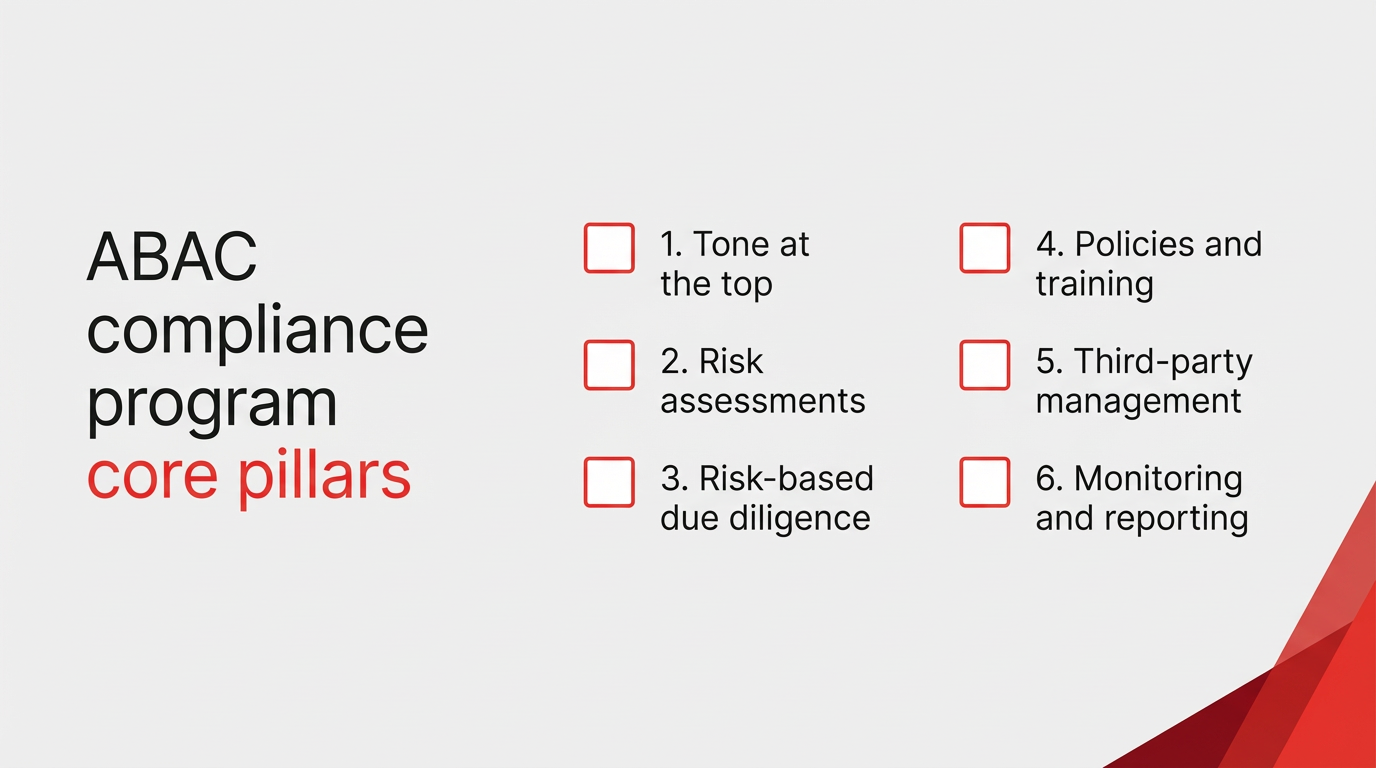
An effective ABAC program addresses seven core pillars:
ABAC compliance starts with leadership commitment. Board members and senior executives must visibly champion anti-corruption values — not just sign off on policies. This means publicly communicating a zero-tolerance approach to bribery and corruption, allocating adequate resources to the compliance function and holding leadership accountable when violations occur.
The policy should define prohibited conduct in specific terms, cover all employees and third parties acting on the organization’s behalf and outline clear consequences for violations. Generic statements of intent are insufficient — your policy must address the specific bribery and corruption risks your organization faces.
Risk assessments form the foundation of any risk-based ABAC program. Map your organization’s exposure across jurisdictions, business lines, third-party relationships and transaction types.
Consider factors such as: countries where you operate or sell (referencing indices like Transparency International’s Corruption Perceptions Index), reliance on government contracts or public-sector customers, use of agents, distributors, consultants and joint venture partners, transaction types that involve licensing, permitting or customs processes and any history of compliance incidents or near-misses.
Regulators routinely uncover evidence of corrupt acts by an intermediary acting on the company’s behalf, both with and without the company’s knowledge. This makes risk-based due diligence essential for any ABAC program.
The level of due diligence should match the level of risk. Low-risk relationships may require basic screening against sanctions lists and adverse media. High-risk relationships — such as government-connected agents in jurisdictions with elevated corruption scores — demand enhanced due diligence, including beneficial ownership verification, financial analysis, and on-the-ground investigations.
Due diligence isn’t a one-time event. Even after onboarding, third-party relationships require ongoing monitoring to identify changes in risk profile — such as new government connections, adverse media coverage or changes in ownership structure.
Your ABAC policies should translate zero-tolerance commitments into specific behavioral expectations. This includes guidelines on gifts and hospitality, charitable donations and sponsorships, facilitation payments, hiring of government-connected individuals and political contributions.
Training must go beyond annual check-the-box exercises. Role-specific training for employees in high-risk functions (procurement, sales, government relations) should include realistic scenarios based on the actual risks your organization faces.
Your ABAC exposure extends through every third party that acts on your organization’s behalf. Contracts with agents, distributors, consultants and joint venture partners should include explicit anti-corruption representations and warranties, audit rights, termination triggers for ABAC violations and mandatory compliance with your organization’s code of conduct.
Don’t stop at contract language. Establish clear processes for third-party onboarding, periodic reassessment and termination when risk thresholds are exceeded.
Taking an always-on approach to compliance monitoring ensures that risks don’t go unchecked. This includes evolving regulations with changing requirements, new employees needing training, third-party risk profiles shifting and new business relationships introducing fresh exposure.
Internal reporting mechanisms must be accessible, confidential and credible. Employees who report potential ABAC violations need confidence that their concerns will be investigated thoroughly and that they won’t face retaliation. “Make sure you have good instruments and process in place,” says Lauterbach. “Set the tone culturally so that there’s no fear to report.”
ABAC compliance is not a destination. Regulatory requirements evolve, enforcement priorities shift and new risks emerge as your organization grows. Build review cycles into your program — assess effectiveness annually, update risk assessments when the business environment changes and incorporate lessons learned from investigations and near-misses.
Third-party relationships represent the single largest source of ABAC exposure for most organizations. Agents, distributors, consultants, joint venture partners and even suppliers can create liability when they engage in corrupt conduct on your behalf — often without your knowledge.
Diligent Institute's What Directors Think 2026 data underscores the challenge: Only 5% of directors rank anti-corruption and fraud prevention among the compliance areas that will demand the greatest board attention, yet 10% identify third-party or supply chain compliance failures as a top organizational risk. When boards deprioritize anti-corruption oversight while acknowledging third-party exposure, the gap leaves organizations vulnerable.
For organizations navigating international operations, the risks compound. Sanctions compliance, export controls and anti-corruption requirements create overlapping obligations that affect the entire third-party ecosystem.
According to the same survey, 26% of directors expect cross-border trade, export controls and sanctions compliance to demand significant board attention in 2026, making it the third-highest compliance priority behind AI regulation and data privacy. Yet boards still lack adequate tools: 39% say technology-enabled compliance monitoring would most improve their oversight, and 35% want better integration of compliance into strategy discussions.
Risk-based due diligence remains the most effective defense. Assigning the appropriate level of scrutiny to each third-party relationship requires assessing risks objectively and systematically, but finding the right balance of how much and how often to conduct due diligence isn’t always easy.
Effective third-party ABAC management includes pre-engagement screening against sanctions lists, watchlists and adverse media; ongoing monitoring throughout the relationship lifecycle; clear escalation procedures when red flags emerge; documented decision-making at each stage of the relationship and regular reassessment of high-risk relationships.
See how leading companies identify and address risks before they become problems.

The compliance challenges documented throughout this guide (managing third-party risk across dozens of jurisdictions, monitoring shifting regulatory requirements, conducting proportionate due diligence at scale and maintaining audit-ready documentation) represent exactly the problems AI-powered governance platforms are designed to solve.
Traditional ABAC compliance relies heavily on manual processes: spreadsheet-based vendor tracking, periodic screening against static watchlists, and quarterly compliance reviews that provide point-in-time snapshots rather than continuous oversight. This approach struggles to keep pace with the speed at which risks emerge and regulations evolve.
Diligent Third-Party Risk Manager addresses these challenges with integrated regulatory and external risk data that screens against 19 million-plus entities, including sanctions lists, politically exposed persons, adverse media and ownership networks. This allows compliance teams to focus on analyzing genuine risks rather than processing false positives. Continuous 24/7 monitoring provides real-time alerts when a third party's risk profile changes, replacing the periodic reviews that leave gaps between assessments.
For organizations managing due diligence across global operations, Diligent Due Diligence Services provide a risk-tiered approach that matches the appropriate level of scrutiny to each relationship. AI-powered reports handle high-volume, low-risk screening at scale. Analyst-led open source investigations and enhanced due diligence cover high-risk relationships in 190-plus countries, combining speed with depth across the full risk spectrum.
Diligent Speak Up Manager strengthens internal reporting mechanisms, a critical component of any ABAC program. AI-powered intake and automated report routing reduce triage delays, while GoTogether® collective reporting helps reduce anonymous reporter drop-off by 30%. The platform's Resolution Hub centralizes cross-team case management, ensuring that reported ABAC concerns are investigated consistently and documented for audit purposes.
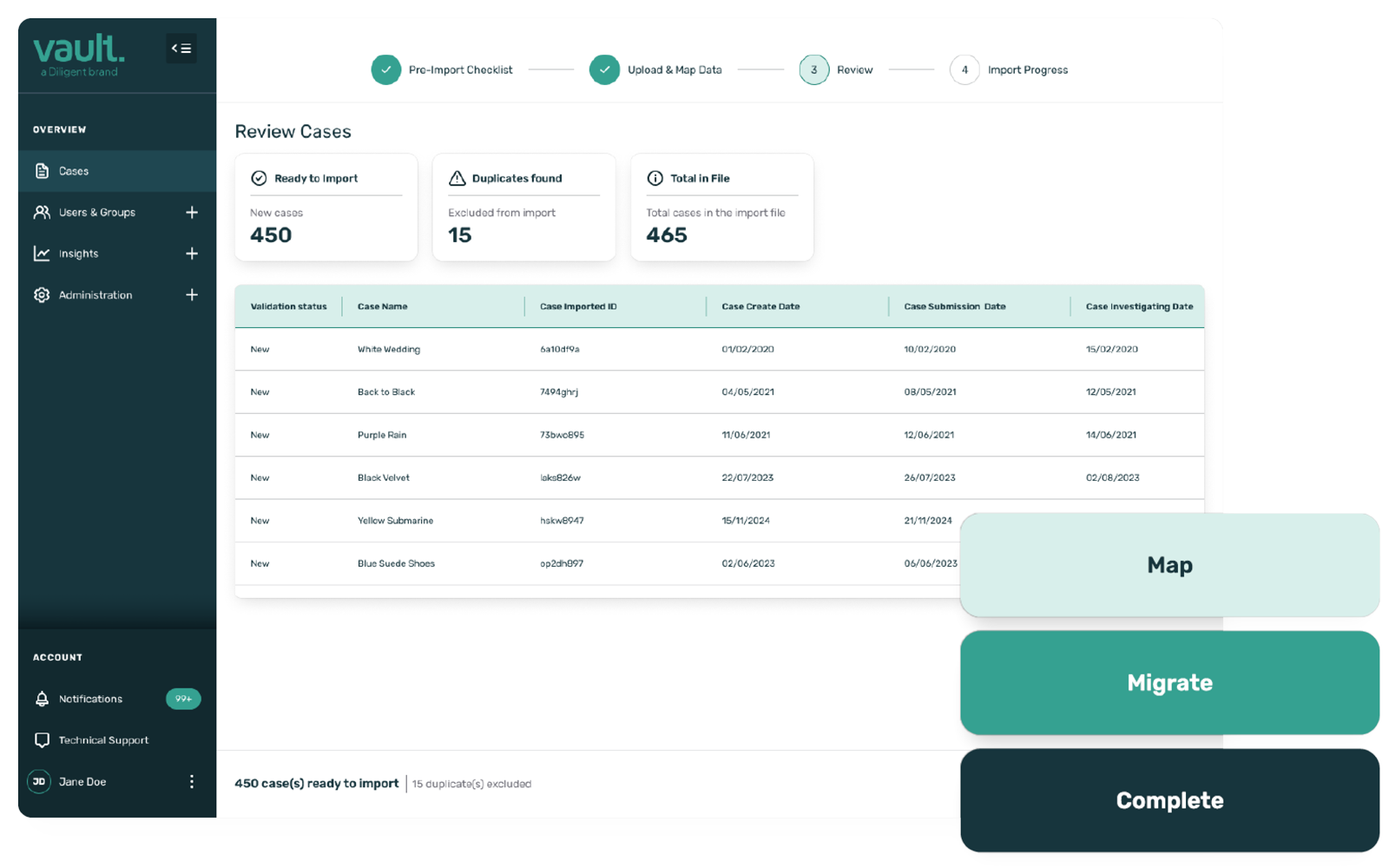
Together, these capabilities move ABAC compliance from reactive, periodic review to continuous, intelligence-driven risk management, enabling organizations to demonstrate the defensible compliance programs that regulators and stakeholders expect.
Strengthen your ABAC compliance program with AI-powered oversight. See how leading compliance teams manage third-party risk, conduct proportionate due diligence and maintain audit-ready documentation across global operations. Schedule a Diligent demo
Anti-bribery focuses on the “supply side” — preventing individuals and organizations from offering, promising or giving bribes. Anti-corruption addresses the “demand side” — preventing officials from accepting those bribes or providing favorable treatment in return. In practice, most compliance programs address both dimensions simultaneously, as laws such as the FCPA and the UK Bribery Act impose liability on organizations involved on either side of a corrupt transaction.
Yes. The FCPA remains binding federal law. The February 2025 executive order paused the initiation of new DOJ investigations — it did not repeal or amend the statute itself. The DOJ issued revised enforcement guidelines in June 2025 that lifted the pause while refocusing priorities.
Several enforcement actions and trials proceeded during 2025, and California’s Attorney General issued a legal advisory confirming that FCPA violations remain actionable under state law. Legal experts widely caution against dismantling compliance infrastructure based on shifting enforcement signals.
Managing multi-jurisdictional ABAC compliance requires mapping the specific laws that apply to each operating jurisdiction, conducting risk assessments tailored to local conditions, implementing global policies with local adaptations and maintaining centralized documentation that satisfies multiple regulatory requirements simultaneously.
Technology platforms that integrate regulatory data across jurisdictions and provide continuous monitoring can significantly reduce the operational burden of multi-jurisdictional compliance.
Penalties vary by jurisdiction but can be severe. FCPA violations can result in criminal fines exceeding $250 million for corporations, up to five years’ imprisonment for individuals and disgorgement of profits. The UK Bribery Act allows unlimited fines and up to 10 years’ imprisonment.
The EU Anti-Corruption Directive (once adopted) will introduce turnover-based fines. Beyond financial penalties, organizations face reputational damage, debarment from public contracts, director disqualification and increased regulatory scrutiny of future business activities.
Ready to strengthen your ABAC compliance program? Schedule a demo to see how Diligent’s AI-powered governance platform helps organizations manage third-party risk, due diligence and compliance across global operations.