
Regulatory change management is the systematic process organizations use to identify, assess and implement new or modified regulatory requirements. For growing companies, the stakes are high: A single missed regulation can derail funding rounds, trigger penalties or expose governance gaps that undermine stakeholder confidence.
The challenge is scale. According to Regology's State of Regulatory Compliance in 2025 survey, 92% of compliance professionals report their roles have become more difficult, with nearly half struggling to keep pace with constant regulatory changes.
Meanwhile, 77% of compliance teams remain stuck using manual processes that increase workload and amplify risks.
In light of the above, this guide provides a practical framework for building or improving your regulatory change management program, whether you're formalizing ad hoc processes for the first time or preparing for transaction due diligence. You’ll learn:
Regulatory change management is the ongoing process of monitoring regulatory developments, assessing their impact on business operations and implementing necessary changes to maintain compliance.
Unlike one-time compliance projects, it requires continuous attention as regulations evolve across multiple jurisdictions and industry frameworks.
The scope varies by organization size and complexity. A domestic company tracking a handful of federal requirements faces different challenges than a multinational organization managing overlapping obligations across dozens of jurisdictions.
Regardless of scale, effective RCM creates documented processes that demonstrate compliance maturity to investors, auditors and regulators.
Effective regulatory change management programs share several core components:
For companies preparing for transactions, documented regulatory change processes signal governance readiness. According to Diligent Institute's Transaction Readiness Report, 20% of respondents cite regulatory compliance as a top transaction challenge, with public companies more likely to identify it as a concern than private companies.
The business risk environment intensifies this pressure. Diligent and Corporate Board Member's Q3 Business Risk Index found legal and compliance leaders rating business risk at 7.9 out of 10 — a 36% increase since Q1 2025. Much of this elevation stems from regulatory unpredictability, ongoing tariff decisions and geopolitical volatility.
"The convergence of these factors keeps risk levels high and requires businesses to invest more in proactive compliance, risk management, scenario planning and governance frameworks," says Taras Lytovchenko, chief legal and compliance officer at Trinitex.
The implication is clear: Ad hoc regulatory compliance tracking is no longer sufficient. Companies that formalize their regulatory change management processes now position themselves for smoother transactions, fewer compliance surprises and stronger relationships with investors and regulators.
Though both involve managing change, these disciplines serve different purposes:
Regulatory change management focuses on external compliance requirements: identifying new laws and regulations, assessing their applicability and implementing necessary operational changes to meet legal obligations.
In contrast, organizational change management addresses internal transitions: restructuring, technology implementations, business culture shifts or process improvements that require employee adoption and behavioral change.
RCM often requires organizational change management skills — particularly when implementing new compliance procedures across business units. But the trigger differs: One responds to external regulatory developments while the other addresses internal strategic decisions.
Traditional regulatory management relies on legal teams manually monitoring regulatory websites, subscribing to newsletters and conducting periodic compliance reviews.
This approach creates significant operational challenges:
"Organizations leading the way in compliance are leveraging technology and procedural reviews not just to meet regulatory obligations but also to strengthen their overall risk posture," says Kristy Grant-Hart, vice president and head of advisory services for Spark Compliance, a Diligent brand. "When companies prioritize advanced compliance tools and ongoing risk assessments, they're better equipped to anticipate regulatory changes and minimize exposure to emerging risks."
This framework provides a systematic approach whether you're building your first formal program or improving existing processes.
Identify the regulatory sources relevant to your business operations, geographic footprint and industry. This includes federal and state regulatory agencies, industry bodies and international requirements for organizations with cross-border operations.
Document monitoring responsibilities and frequencies. Determine who tracks which sources, how often and through what channels. For resource-constrained teams, prioritize high-impact regulatory bodies first, then expand coverage as capacity allows.
Not every regulatory change requires the same response. Develop criteria for evaluating which changes materially affect your operations versus those with minimal relevance.
Consider which business units, processes and systems each regulation touches. Map requirements to existing policies and internal controls to identify gaps. This assessment informs resource allocation and implementation timelines.
Regulatory compliance spans functions — legal, operations, finance, IT and HR may all need involvement for a single requirement. Establish clear ownership for each regulatory change, including who leads implementation, who contributes and who approves final compliance.
Additionally, document escalation paths for high-priority changes or those requiring significant resources. Board and executive visibility increases for regulations affecting strategic operations or carrying substantial penalty risk.
Translate regulatory requirements into operational changes: updated policies, modified procedures, new controls or adjusted systems. Create implementation timelines that account for effective dates while allowing adequate testing and training.
Also, coordinate cross-functional implementation where regulations affect multiple departments. A new data privacy requirement, for instance, may require IT system changes, updated employee training and revised customer communications.
Maintain records demonstrating how your organization identified, assessed and implemented each regulatory change. This documentation serves multiple purposes: internal audit support, external regulatory examinations and transaction due diligence.
Validate that implemented changes actually achieve compliance through testing, reviews or attestations. Document validation results and any remediation actions taken.
Regulatory change management is ongoing, not a one-time project. As such, you’ll need to:
Use these insights to refine your processes. As your organization grows or enters new markets, expand monitoring and assessment capabilities accordingly.
Discover how AI-powered platforms streamline regulatory tracking across financial services, healthcare and technology sectors.

The volume and velocity of regulatory change have outpaced what manual processes can handle. Organizations tracking hundreds of changes annually across different jurisdictions face operational strain that spreadsheets and email monitoring cannot manage sustainably.
AI-powered regulatory change management platforms address these challenges through automation and intelligence capabilities that transform how compliance teams operate.
These capabilities shift compliance teams from reactive tracking to proactive management, identifying regulatory changes weeks earlier, reducing manual effort and building the documented processes that transactions and audits demand.
The Diligent One Platform provides unified GRC capabilities that integrate regulatory change management with enterprise risk assessment, board oversight and policy management — eliminating data silos while streamlining compliance as part of holistic governance oversight.
Within this platform, Diligent Regulatory Compliance Management centralizes compliance data and monitors regulatory changes across multiple jurisdictions, delivering automated alerts and impact analysis.
The AI-powered compliance assistant analyzes regulatory updates, identifies key changes and suggests mitigating controls — enabling teams to respond faster and with greater confidence.
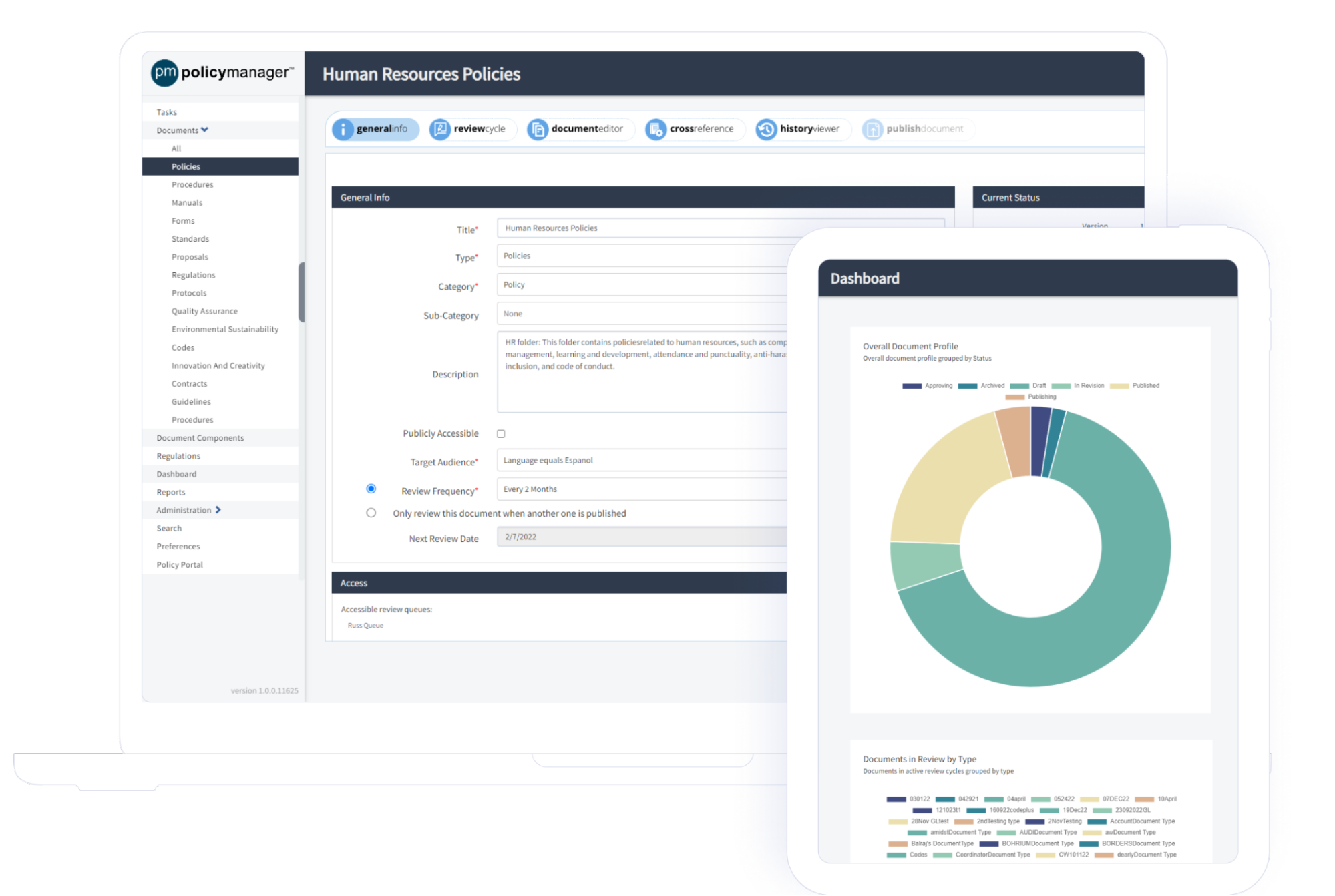
Diligent’s Policy Manager complements these capabilities by centralizing regulatory requirements, mapping controls to mandates and automating policy review processes that ensure alignment across teams and jurisdictions.
As regulatory complexity continues to accelerate, the gap between organizations using automated compliance tools and those relying on manual processes will only widen.
Companies that invest in regulatory change management infrastructure now build the compliance maturity that supports growth, transactions and long-term stakeholder confidence.
Ready to transform your regulatory change management processes? Schedule a demo to see how Diligent delivers the regulatory intelligence and automation your compliance team needs.
Start by mapping your regulatory universe: the jurisdictions where you operate, your industry-specific requirements and any cross-border obligations.
Then, establish monitoring for relevant regulatory agencies and industry bodies. Use filtering criteria based on business operations, geographic presence and product or service offerings to prioritize which changes require detailed assessment.
Effective regulatory change management follows six core steps: establish monitoring coverage, assess regulatory impact, assign ownership and accountability, plan and implement changes, document and validate compliance and continuously monitor and improve processes.
The specific implementation varies by organization size and regulatory complexity.
Technology platforms automate regulatory monitoring across multiple jurisdictions, provide AI-powered impact assessment, map new requirements to existing controls and maintain comprehensive audit documentation.
These capabilities reduce manual effort while improving coverage consistency and response speed. Organizations using automated systems typically identify regulatory changes weeks or months earlier than manual tracking allows.
Regulatory change management responds to external compliance requirements — new laws, regulations or regulatory guidance that require organizational adaptation. General change management addresses internal transitions such as restructuring, technology implementations or culture initiatives.
While both require stakeholder coordination and implementation planning, the trigger and objectives differ significantly.
See how Diligent helps compliance teams stay ahead of regulatory change. Request a demo to get started.