
In this article

Internal controls are your first line of defense against operational, financial, and regulatory risks. Like implementing multi-factor authentication or establishing approval workflows, these systematic processes keep threats at bay while enabling strategic growth.
Recent enforcement data underscores their critical importance — the SEC imposed $8.2 billion in financial remedies during 2024, with internal control violations driving 58% of all enforcement actions, according to a Cornerstone study.
Internal controls extend far beyond traditional financial reporting safeguards. They now encompass AI governance, cybersecurity oversight, environmental, social and governance (ESG) data integrity, and real-time risk monitoring that organizations need to navigate today's complex regulatory environment. As compliance costs continue rising and regulatory scrutiny intensifies, effective internal controls have evolved from basic risk management to strategic competitive infrastructure.
This comprehensive guide explains why internal controls are essential for sustainable business growth by covering:
Internal controls protect an organization's systems, data, and assets while enabling strategic decision-making through reliable information and risk oversight. Their importance extends far beyond basic security, particularly as regulatory penalties reach record levels and business complexity continues expanding across global operations.
Organizations with effective internal control frameworks benefit from:
The strategic value becomes clear when considering that companies with sophisticated control systems experience fewer audit deficiencies, lower compliance costs, and faster response times to emerging business challenges.
Here are 20 critical ways that internal controls drive organizational success:
Risk mitigation remains the fundamental purpose of internal controls, but the scope has expanded beyond traditional financial oversight. Controls now address operational risks, technology vulnerabilities, supply chain disruptions, and regulatory changes that can impact business continuity and growth trajectories.
Today, risk mitigation requires integrated control frameworks that correlate risks across departments, geographies, and business processes. Organizations achieve comprehensive risk management through controls that monitor everything from AI algorithm performance to ESG data accuracy.
Internal controls provide the foundation for implementing complex business processes across growing organizations. When controls are embedded into workflows, employees understand expectations and can engage with systems and data securely while supporting strategic initiatives.
Process implementation through controls becomes especially critical during periods of rapid growth, regulatory change, or technology adoption, where consistent execution determines successful outcomes.
Another reason why internal controls are important is that they can lead to process improvements. Controls apply a risk-based lens to all activities, empowering risk teams to hone in on processes that contribute to strategic objectives and mitigate risk. This ultimately leads to a more productive, more risk-aware company culture.
Process optimization through controls enables organizations to eliminate redundant activities, automate routine tasks, and allocate resources toward strategic priorities that drive competitive advantage.
With internal controls, there's only one right way to engage with any system, data set or repetitive process. That means employees only leverage their most efficient option rather than creating their own processes as they go. Automated internal controls can further streamline activities, leaving teams free to pursue more strategic work that directly contributes to company objectives.
Data accuracy is critical for any organization. Without it, boards make decisions based on faulty information, leading to strategies that can do the business more harm than good. Internal controls are important because they offer guidelines for collecting, storing and reporting information. This creates systems for accurate, timely and reliable data for boards and investors alike.
Organizations with robust data controls can respond quickly to market changes and operational challenges because leadership has confidence in the information supporting critical business decisions.
A key tenet of internal controls is segregating duties, meaning the person undertaking an action isn't also the person approving it. For example, an employee purchasing new laptops for the sales department shouldn't be the same employee who approves the purchase order. This approach ensures that financial and operational actions benefit the organization while protecting against both intentional misconduct and human error.
As the New Jersey Society of CPAs notes, organizations should "build a segregation of duties matrix, listing out all the responsibilities by department and by individual to properly ensure there are no conflicts where individuals have access to several different areas."
Financial statements can be challenging to produce if the organization's transactions aren't regularly available. Having controls in place for how and when employees report transactions paves the way for more accurate financial statements, enabling leadership to make more informed decisions regarding the company's finances.
Automated error detection capabilities within modern internal controls help organizations identify and resolve mistakes before they impact financial statements, regulatory filings, or operational performance. This proactive approach prevents reputational damage and regulatory violations.
Error identification becomes especially important in complex organizations where manual processes cannot effectively monitor all transactions and data flows that influence business outcomes.
Beyond smoothening internal operations, internal controls support compliance with the regulations. For example, regulations like the Sarbanes-Oxley Act require organizations to implement internal controls for financial reporting.
Disclosures regarding these controls must also be included in the annual report. Organizations with internal controls can more easily prove their SOX compliance and show investors that they utilize sound financial practices.
Separation of duties — spreading responsibility for financial processes across multiple employees — is a key tenet of effective internal controls. When multiple employees verify financial data, it's less likely that any of them will mismanage finances — either accidentally or for their own gain. This produces accurate financial statements that boards can reference and investors can trust.
Organizations suffer far-reaching reputational damage when scandals come to light, especially those that harm investor finances. For example, Enron was found guilty of hiding debts in 2001, and that reputation followed them for decades — largely because they lost shareholders millions of dollars in the process. Accounting internal controls create a hostile environment for misreporting and other types of fraud, leading to more trustworthy practices.
Like internal controls themselves, external audits are a regulatory requirement. Although you can't avoid an audit, internal controls can increase the likelihood of receiving a clear report. What's more, if you can prove the extent of your internal controls system, you may reduce the audit scope — leading to reduced audit time and fees.
Good internal controls are mapped to corporate goals and objectives. Risk teams will identify the practices the organization needs to achieve those goals and then design internal controls that allow those practices to be safely completed.
Internal controls now include cybersecurity measures that protect against ransomware, data breaches, and remote work vulnerabilities. These controls integrate security protocols into daily operations rather than treating cybersecurity as a separate IT function.
Effective cybersecurity controls include access management, data encryption, incident response procedures, and employee training programs. Organizations benefit most when these security measures are integrated into standard business processes rather than added as an afterthought.
Internal controls ensure ESG data accuracy and reliability as investors and regulators demand better sustainability reporting. These controls validate environmental metrics, social impact measurements, and governance practices across business operations.
Companies can demonstrate authentic sustainability commitments while meeting disclosure requirements by implementing controls that track energy usage, diversity metrics, and ethical sourcing practices.
AI governance controls address algorithm bias, data privacy, and decision transparency as organizations integrate artificial intelligence into business processes. These controls include regular algorithm audits, data source validation, and clear accountability for AI-driven decisions.
Practical AI controls help organizations capture competitive benefits while avoiding discrimination lawsuits, privacy violations, and regulatory penalties in evolving technology environments.
Build an internal controls infrastructure that scales with organizational growth while maintaining regulatory excellence.

Advanced controls provide oversight of business processes and financial transactions rather than waiting for quarterly reviews. This real-time approach catches issues before they become expensive problems or regulatory violations.
Supply chain controls monitor vendor performance, assess geopolitical risks, and maintain business continuity when disruptions occur. These controls include vendor qualification processes, alternative supplier identification, and contract terms that protect against operational impacts.
Organizations with global suppliers benefit from controls that track delivery performance, financial stability, and compliance with labor and environmental standards across their entire supply network.
Remote work controls address data security, process consistency, and collaboration challenges that didn't exist in traditional office environments. These include:
Practical remote work controls ensure employees can access necessary systems securely while maintaining consistent processes across different locations and time zones.
Strong internal controls enable faster decision-making, better risk management, and higher stakeholder confidence compared to competitors with weaker control systems. This operational advantage helps organizations pursue growth opportunities while maintaining performance standards.
Companies with effective controls can respond to market changes quickly, avoid costly mistakes, and demonstrate reliability to customers, investors, and business partners.
Strong internal controls drive competitive advantage by enabling faster decision-making, better risk management, and higher stakeholder confidence. Organizations that treat controls as operational improvements rather than regulatory burdens position themselves for long-term success in managing complex regulatory requirements.
Policy documents and manual testing are great, but building effective internal controls goes beyond these measures. It needs integrated technology that automates routine oversight, provides early risk warnings, and lets teams focus on strategic work instead of administrative tasks.
To this end, Diligent provides:
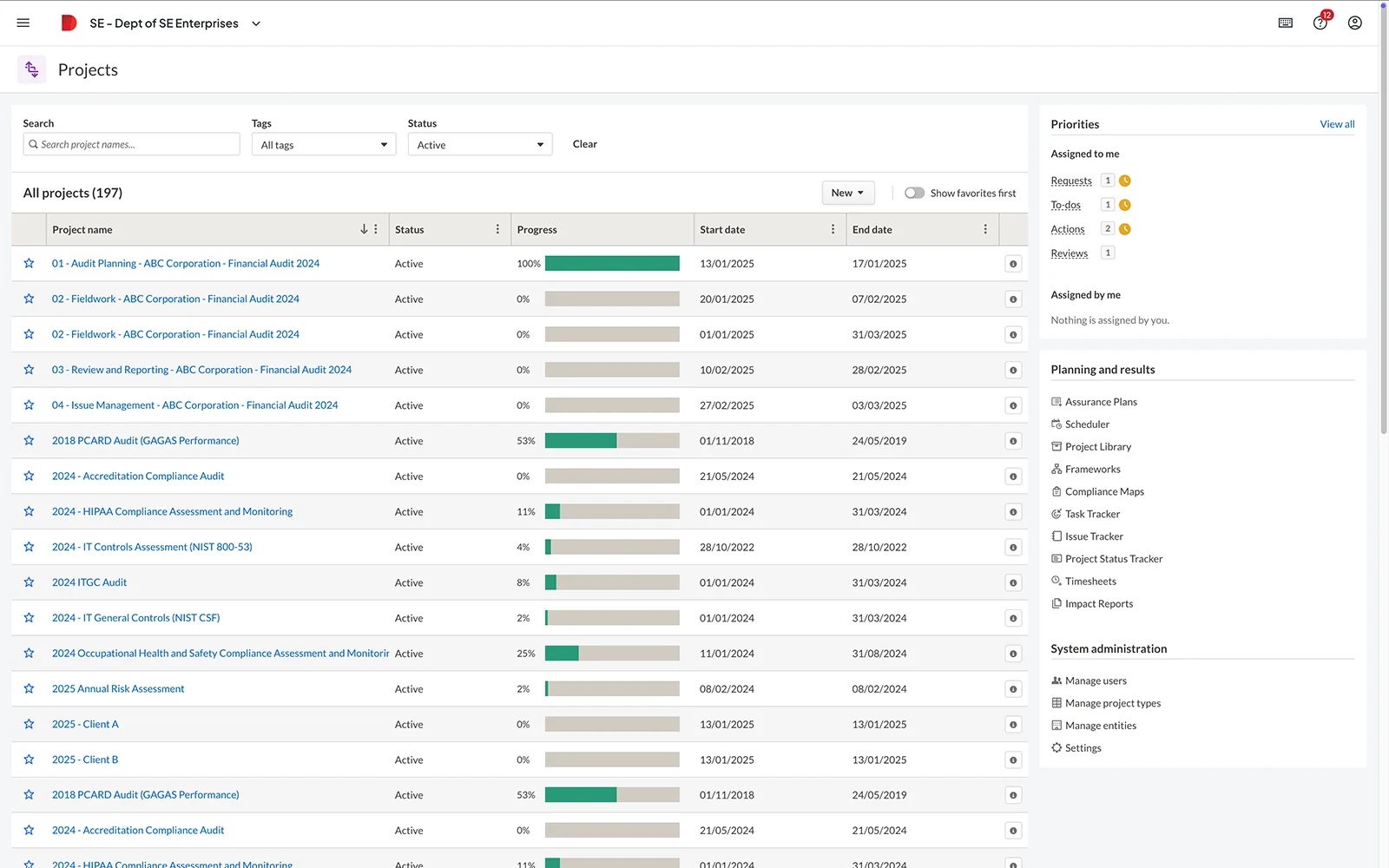
AI-powered automation enables risk and compliance teams to shift from manual testing and coordination to strategic oversight. This identifies emerging risks, predicts potential violations, and demonstrates governance excellence to stakeholders across all business functions.
Ready to see how AI-powered internal controls can accelerate your organization's growth while strengthening governance excellence? Schedule a Diligent demo to discover how leading companies are building scalable internal controls systems.
The biggest risks include substantial financial penalties, reputational damage, audit failures, and increased scrutiny from regulators and investors.
Revenue recognition processes and internal accounting controls are the most scrutinized areas, representing the majority of SEC enforcement allegations in 2024. Organizations should prioritize segregation of duties, comprehensive documentation, and automated monitoring of financial reporting processes.
AI transforms internal controls through real-time monitoring, predictive risk assessment, and automated compliance documentation. Modern solutions can identify potential violations before they occur, correlate complex data relationships, and provide continuous oversight that scales with organizational complexity.
Organizations should consider upgrades when facing regulatory changes, experiencing rapid growth, preparing for transactions, or when current systems can't provide adequate audit trails and real-time monitoring capabilities required by governance standards.
Book a Diligent demo to transform your internal controls framework and ensure regulatory excellence.